

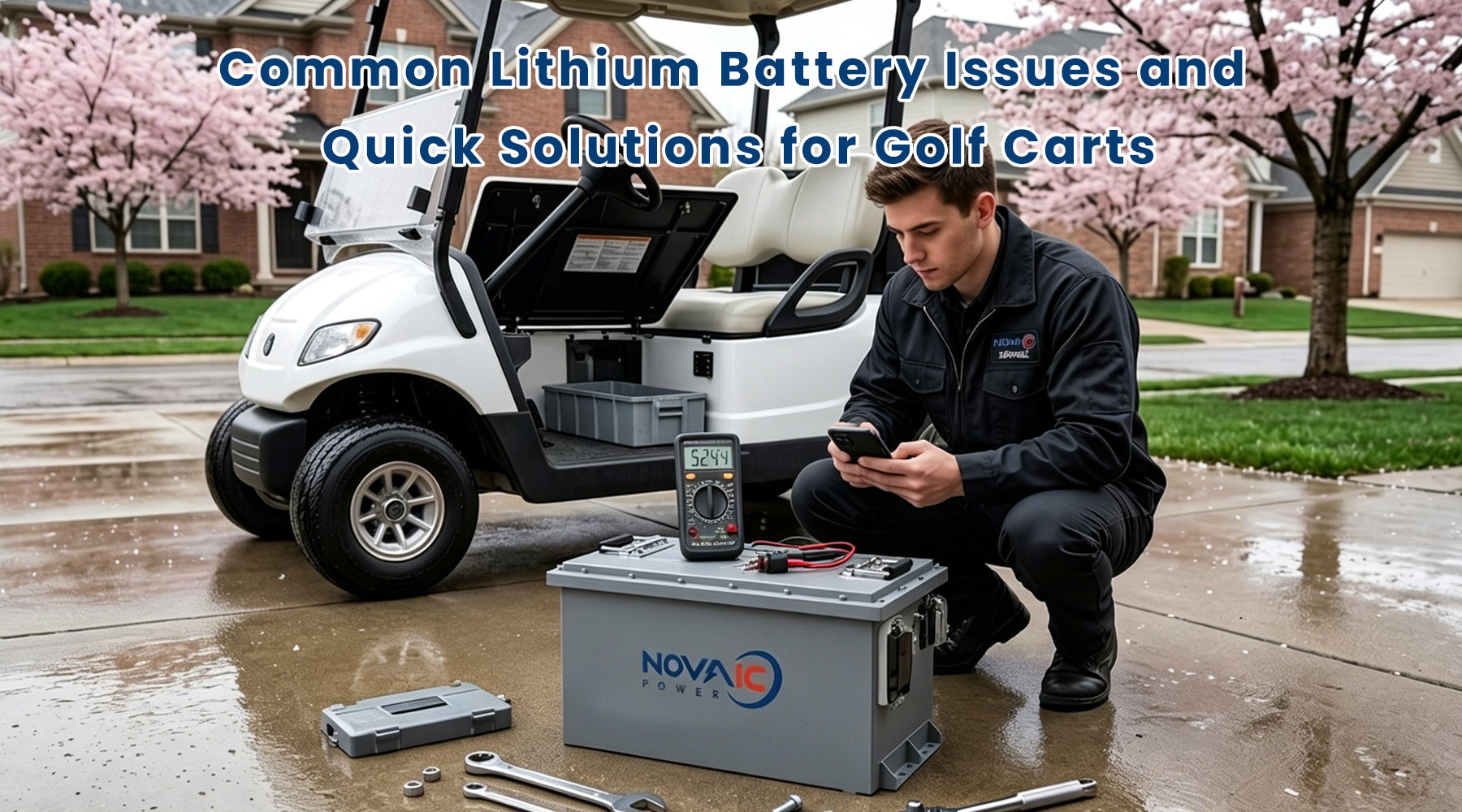
 Lithium batteries have become the go-to choice for golf carts, low-speed electric vehicles, and industrial equipment due to their long lifespan, high efficiency, and low maintenance. However, even high-quality golf cart lithium batteries can experience issues because of installation errors, environmental factors, or improper usage.
In this guide, we’ll cover the most common lithium battery problems, how to troubleshoot them, and tips to keep your battery performing at its best.
1. Battery Shows Power, but the Golf Cart Won’t Start
1.1 Symptoms
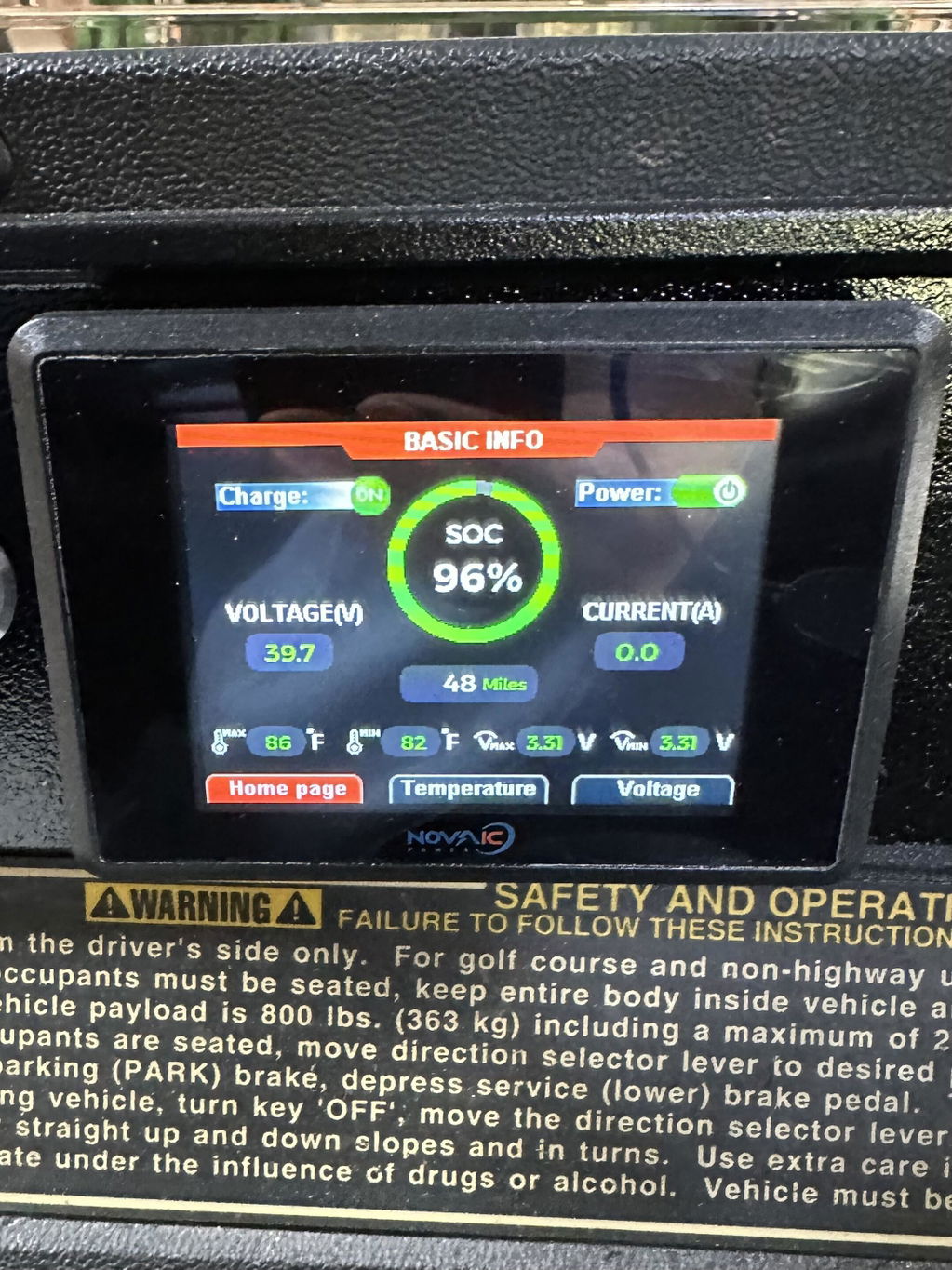
Battery display shows a normal charge
The golf cart doesn’t power on
Motor doesn’t respond
1.2 Possible Causes
Main battery switch is not fully turned on
Communication cable between the display and battery is loose
Battery Management System (BMS) is in protection mode
Contactor fails to engage
1.3 Quick Fixes
Turn on the main battery switch completely
Ensure the display-to-battery cable is securely connected
Press and hold the power button to reset the battery
Check all connections between the battery and controller
If the issue persists, contact golf cart battery support for professional assistance.
2. Zero Voltage on Battery Terminals
2.1 Symptoms
Battery display appears normal
Multimeter reads 0V at main positive/negative terminals
No clicking from the internal contactor
2.2 Possible Causes
Faulty internal contactor
BMS has cut off output due to detected issues
Loose wiring during shipping
2.3 Quick Fixes
Turn off the main battery switch, wait 5 minutes, then restart
Inspect all external wiring
Ensure the battery is not in overvoltage, undervoltage, or overtemperature protection
If voltage still reads 0V, contact your Novaic lithium battery support team for inspection or replacement.
3. Battery Won’t Charge
3.1 Symptoms
Charger shows no response
Charger indicator light is abnormal
Battery level remains the same after charging
3.2 Possible Causes
Charger malfunction
Loose or corroded charging port
Low-voltage protection mode activated
Using an incompatible charger
3.3 Quick Fixes
Verify charger output voltage
Inspect the charging port and clean if necessary
Use the manufacturer-recommended charger
Confirm AC power supply is stable
Routine charging equipment checks help prevent most issues.
4. Noticeable Reduction in Range
4.1 Symptoms
Shorter runtime even at full charge
Reduced motor power
More frequent charging
4.2 Possible Causes
Frequent deep discharges or overloading
Low tire pressure
Motor or controller efficiency drop
Extreme operating temperatures
4.3 Quick Fixes
Maintain proper tire pressure
Avoid repeated deep discharges
Operate the battery within recommended temperature ranges
Regularly inspect motor and controller performance
Good habits help extend lithium battery lifespan and maximize range.
5. Display Shows Incorrect Data
5.1 Symptoms
Battery level jumps unexpectedly
Voltage readings are inaccurate
Bluetooth connection fails
5.2 Possible Causes
Loose communication cables
Outdated display software
Electromagnetic interference
5.3 Quick Fixes
Check display cable connections
Restart both the display and battery
Update to the latest firmware
Keep devices away from strong electromagnetic sources
Most display issues can be resolved by reconnecting or rebooting the system.
Preventing Lithium Battery Problems
Preventive maintenance is key to maximizing golf cart lithium battery performance:
Use a compatible charger recommended by the manufacturer
Avoid leaving the battery fully discharged for long periods
Inspect battery terminals regularly
Keep the battery clean and dry
Avoid extreme temperatures (high heat or freezing)
Store long-term at 30–60% charge
Conclusion
Modern lithium battery systems come equipped with advanced BMS and multiple safety protections. Most problems can be diagnosed and resolved quickly with basic troubleshooting knowledge.
Understanding common golf cart battery issues and their solutions reduces downtime, extends battery life, and ensures reliable performance. For problems you cannot resolve, contact professional support to maintain your battery’s safety and efficiency.
Share:
How to Install a Lithium Battery in an EZ-GO TXT (Step-by-Step Guide)
Can You Charge a LiFePO4 Lithium Battery with a Standard Lead-Acid Charger?
1 comment
6318381325 show u exactly is going on